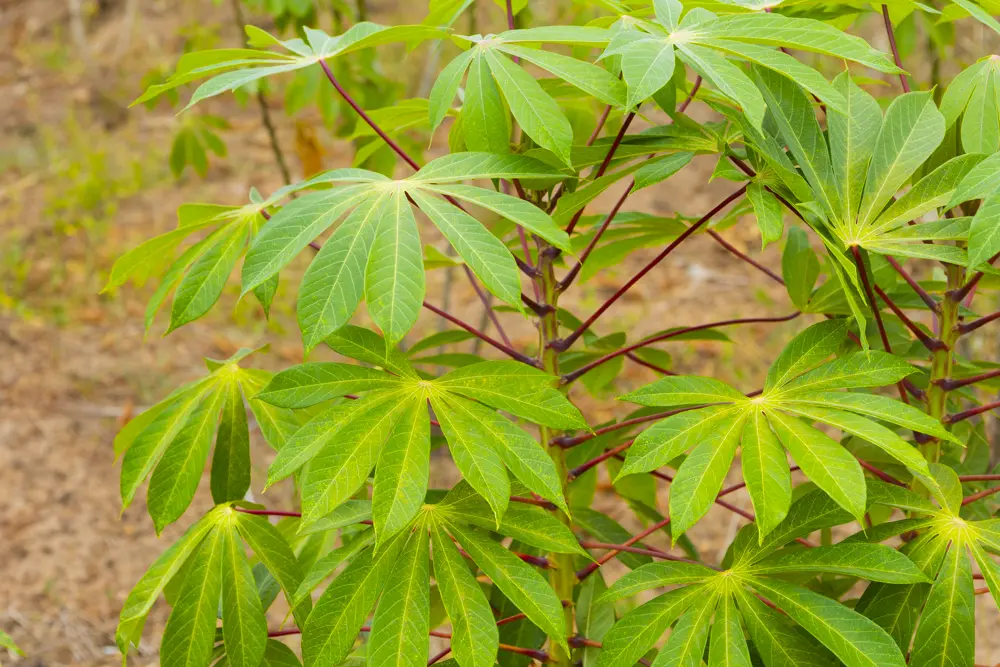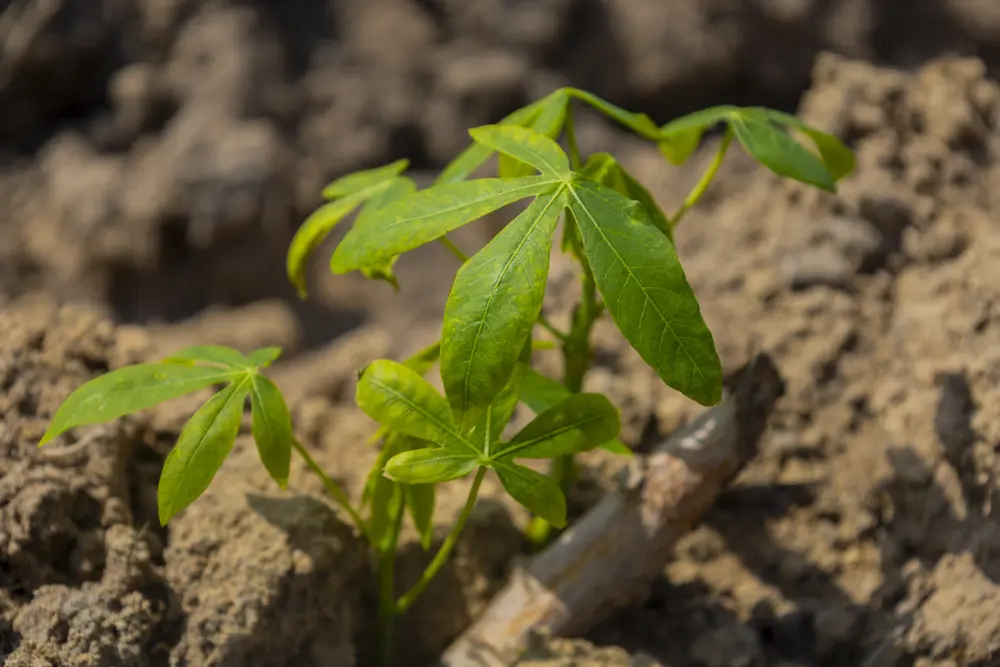


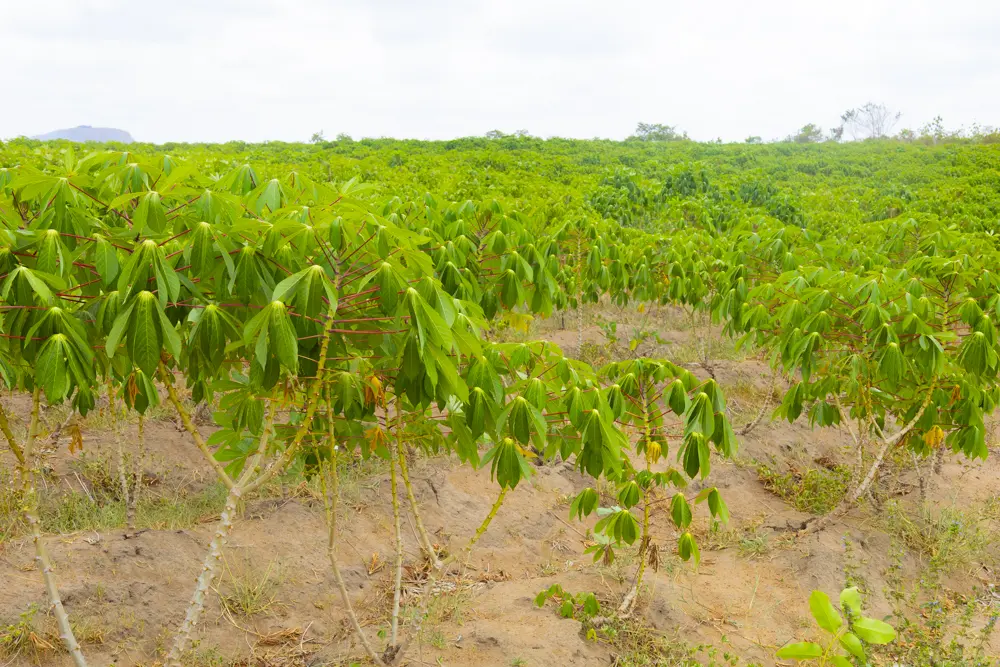
Cassava (Manihot esculenta) is one of Africa’s most important food security crops, providing calories and income for hundreds of millions of people across the continent. Native to South America, it was introduced to Africa by Portuguese traders during the sixteenth century and has since become deeply integrated into African farming systems and food cultures.
Cassava belongs to the Manihot genus, which includes approximately 100 species, most of them wild. It is the only one cultivated commercially.
Today, cassava is the continent’s second most widely cultivated staple crop after maize. Its remarkable adaptability allows it to thrive in environments where many other crops struggle, making it indispensable to smallholder farmers facing increasingly unpredictable climatic conditions.
Despite its widespread cultivation, the variety of cassava available is not well known. Understanding the distinction between landraces and improved varieties helps explain how cassava breeding has evolved and why both groups continue to play vital roles in modern agriculture.
What Are Cassava Landraces?
Since cassava arrived in Africa more than five centuries ago, generations of farmers have continuously selected, exchanged and propagated plants that performed well under local conditions. Over time, these farmer-selected populations evolved into what are known as landraces.
A landrace is a locally adapted variety that has developed through years of farmer selection rather than formal scientific breeding. Farmers typically preserve landraces because they possess desirable characteristics such as:
- adaptation to local soils and climates;
- tolerance to pests and diseases;
- reliable yields under low-input farming systems;
- ease of harvesting and processing;
- preferred cooking or processing qualities.
Many landraces are identified by local names that reflect their origin, appearance or cultural significance. Examples include names such as Oko Iyawo, Nwanyi Ocha, Give me Chance and Malam Bida. These names often differ from one community to another, highlighting the close relationship between cassava cultivation and local farming traditions.
Although landraces and improved varieties might be thought of as separate groups, their relationship is much closer. Many improved varieties owe their ancestry to these farmer-selected landraces.
What Are Improved Cassava Varieties?
Improved varieties are developed through structured plant breeding programmes conducted by agricultural research institutions. Plant breeders identify desirable characteristics from different parent plants and combine them through controlled crosses, followed by several years of evaluation and selection. Learn more in How New Cassava Varieties Are Developed.
The objectives of cassava improvement typically include:
- higher root yields;
- increased starch content;
- earlier maturity;
- resistance to major diseases such as cassava mosaic disease and cassava brown streak disease;
- improved resistance to pests;
- enhanced suitability for food processing and industrial uses.
In Nigeria, organisations such as the International Institute of Tropical Agriculture (IITA) and the National Root Crops Research Institute (NRCRI) have led cassava improvement programmes for several decades. More recently, collaborative initiatives involving national and international partners have accelerated the development of improved varieties with higher productivity and greater resilience to climate change.
Many improved varieties are released under official breeding designations such as the Tropical Manihot Selection (TMS) series from IITA. There is also the NR, NICASS and UMUCASS series from NRCRI, among various other naming conventions.
Some of these have received more farmer-friendly names that are easier to recognise and promote. Examples include varieties marketed as Game Changer (TMS13F1160P0004), Hope (NR130124), Ayaya (CR 36-5) and Obasanjo-2 (TMS13F1343P0022).
Sometimes, improved varieties are simply referred to as Agric in some farming communities. In practice, it can be difficult to identify a particular variety, but many farmers are often very familiar with the varieties they grow and can discuss their traits in detail.
These improved varieties have contributed significantly to increased cassava production by enabling farmers to harvest more roots from the same area of land while reducing losses caused by diseases and environmental stress.
Why Do Farmers Still Grow Landraces?
Given the availability of improved varieties, one might expect traditional landraces to disappear. In practice, however, both continue to coexist across many farming communities.
One important reason is that landraces remain the foundation of future breeding programmes. Plant breeders depend on their diverse genetic characteristics to develop new varieties capable of addressing emerging challenges such as climate change, evolving pests and diseases, and changing consumer preferences. (Learn more in A Brief History of Cassava Breeding in Africa.)
Equally important are the practical preferences of farmers and processors. Some landraces consistently produce superior gari, fufu, lafun or other traditional foods because of characteristics such as dry matter content, fibre levels, texture, flavour or fermentation behaviour. In some cases, consumers may actively prefer products made from particular local varieties, creating stable market demand despite the availability of newer varieties.
Farmers also value familiarity. Having cultivated certain landraces for generations, they understand how those varieties respond to local soils, rainfall patterns and management practices. This accumulated knowledge reduces production risks and supports household food security.
Conserving Diversity for Future Food Security
Maintaining a diversity of cassava varieties within farming systems offers important ecological and economic advantages.
Growing several genetically distinct varieties reduces the likelihood that a single pest, disease or climatic event will devastate an entire crop. Although cassava is often described as a monocrop, fields containing multiple landraces and improved varieties possess greater genetic diversity than fields planted exclusively with a single variety. This diversity acts as a natural insurance policy, improving resilience while also preserving valuable genetic resources for future breeding efforts.
As climate variability increases and new production challenges emerge, conserving traditional landraces alongside improved varieties will remain essential for sustainable cassava production.
Why Landraces and Improved Varieties Both Matter
Cassava’s remarkable success across Africa reflects centuries of adaptation by both nature and farmers. Traditional landraces embody generations of farmer knowledge and preserve valuable genetic diversity, while improved varieties demonstrate the benefits of modern plant breeding in increasing productivity, disease resistance and climate resilience.
Rather than competing with one another, landraces and improved varieties complement each other. Together they provide the genetic foundation needed to strengthen food security, support rural livelihoods and sustain cassava production for future generations.
Understanding these differences enables farmers, researchers, policymakers and consumers to make better-informed decisions about cassava cultivation, conservation and improvement.
Related Articles
Further Reading and Resources
Publications
- Food and Agriculture Organization (FAO). (2013). Save and Grow: Cassava—A Guide to Sustainable Production Intensification.
- International Institute of Tropical Agriculture (IITA). (2021). Food Security and Economic Benefits of Newly Released Cassava Varieties
- International Institute of Tropical Agriculture (IITA). (2020). IITA and Partners Rename Improved Cassava Varieties for the International Market
- International Institute of Tropical Agriculture (IITA). (2017). Cassava farmers’ preferences for varieties and seed dissemination system in Nigeria: Gender and regional perspectives
- Bela Teeken et al. (2020). Understanding Cassava Varietal Preferences Through Pairwise Ranking of Gari‐Eba and Fufu Prepared by Local Farmer–Processors
- Felix I. Nweke. The Cassava Transformation in Africa
- Matema L.E. Imakumbili et al. (2019).Cyanogenic glucoside production in cassava: The comparable influences of varieties, soil moisture content and nutrient supply
- Maria A. Ospina et al. (2023). Content and distribution of cyanogenic compounds in cassava roots and leaves in association with physiological age
Key Organizations