New cassava cultivars are developed through a conventional breeding process that involves selecting parent plants, cross-pollinating them, evaluating thousands of offspring under field conditions, and testing the best-performing clones with farmers. The process typically takes six to seven years and aims to produce improved cassava cultivars with higher yields, better disease resistance, and greater tolerance to environmental stresses.
Why Improved Cassava Cultivars Are Needed
Cassava farmers in tropical regions face year-round pressure from pests and diseases due to the warm climate. Severe outbreaks can lead to substantial yield losses or even complete crop failure. Climate change can further increase crop stress, making plants more vulnerable to pests and diseases.
For many smallholder farmers, the rising and unpredictable cost of fertilisers and crop protection products is a major challenge. Cassava’s long growing cycle can make this even more difficult. While some early-maturing varieties are ready for harvest in about six months, many require up to 12 or 18 months to reach maturity.
By comparison, staple crops such as maize and cowpea can often be harvested within two to four months of planting. Because cassava stays in the field much longer, farmers may need to invest in inputs over an extended period, increasing production costs.
To address these challenges, researchers develop improved cassava cultivars that can produce higher yields, resist diseases and pests, and perform better under difficult environmental conditions. In some cases, improved cultivars can deliver up to 40% higher yields even without additional fertiliser applications.
How the Cassava Breeding Process Begins
Most cassava cultivars are developed by government agencies, public research institutions, and international agricultural organisations rather than commercial seed companies. Developing a new variety requires years of research, extensive field testing, and significant financial investment.
Unlike crops such as maize or sorghum, cassava is propagated mainly through stem cuttings rather than seeds. Because farmers can easily replant cuttings from their own fields, commercial companies have limited opportunities to recover the costs of breeding new cassava cultivars. As a result, public institutions play the leading role in cassava breeding programmes.
Selecting Parent Varieties
At the start of a cassava breeding programme, breeders identify the specific traits they want to improve. These may include:
- Higher productivity
- Resistance to pests and diseases
- Drought tolerance
- Flood tolerance
- Better storage qualities
- Adaptation to local growing conditions
Cassava varieties with desirable characteristics are selected as parent plants for breeding.
Controlled Cross-Pollination
When the selected cassava plants flower, breeders manually transfer pollen from one selected variety to another. The flowers are carefully isolated to ensure that only the intended pollen reaches each plant.
This controlled pollination allows breeders to combine beneficial traits from different parent varieties. The resulting seeds are harvested, labeled, and recorded for future evaluation.
Testing and Selecting New Cassava Plants
Establishing Field Trials
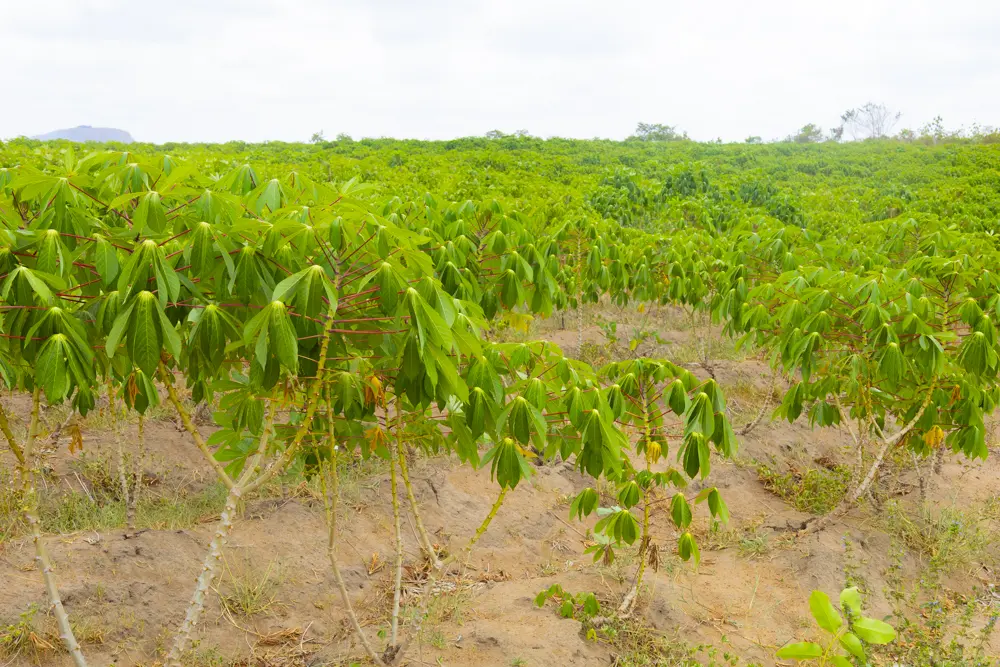
The seeds produced through controlled pollination are planted in isolated test plots. Researchers monitor each plant throughout its growth cycle and collect detailed data on its performance.
Every seedling is evaluated based on the breeding objectives established at the beginning of the programme.
Disease and Pest Screening
To identify disease-resistant cassava plants, breeders often expose trial plants to major cassava pests and diseases. Plants that show strong resistance are retained for further testing, while weaker plants are eliminated.
Climate and Stress Testing
Researchers may also evaluate plants under different environmental conditions, including:
- Drought stress
- High temperatures
- Flooding
- Poor soil conditions
This helps identify cassava cultivars that can maintain productivity under challenging conditions.
From Thousands of Seedlings to Elite Cassava Clones
After the first year of testing, breeders select only the best-performing plants. These selected plants are then cloned using stem cuttings and replanted for further evaluation.
The process of testing, selection, and replanting continues over several years. During each cycle, plants are exposed to additional disease, pest, climate, and soil challenges.
As testing becomes more rigorous, more plants are removed from the programme.
A typical cassava breeding project may begin with 50,000 to 100,000 seedlings in the first year. After multiple rounds of evaluation, only a handful of elite clones may remain.
In some cases, fewer than five elite cassava clones are selected from the original population.
Farmer Testing and Variety Release
Before a new improved cassava variety is officially released, it undergoes real-world testing on farmers’ fields.
Participating farmers grow the elite clones under local farming conditions and provide feedback on characteristics such as:
- Yield performance
- Ease of cultivation
- Disease resistance
- Root quality
- Consumer acceptance
Researchers use this feedback to determine which cultivars should be released to the public.
From the initial cross-pollination stage to final release, the entire cassava variety development process can take six to seven years.
How Improved Cassava Planting Materials Are Multiplied
One challenge after releasing a new cassava variety is producing enough planting material for widespread distribution.
Unlike grain crops, cassava plants produce relatively few planting materials or propagules. While a single maize plant can produce hundreds of viable seeds, a single cassava plant may provide only about ten stem cuttings for the next planting season, making rapid multiplication difficult.
To overcome this limitation, breeders use one of these specialised propagation techniques:
Ministem Propagation
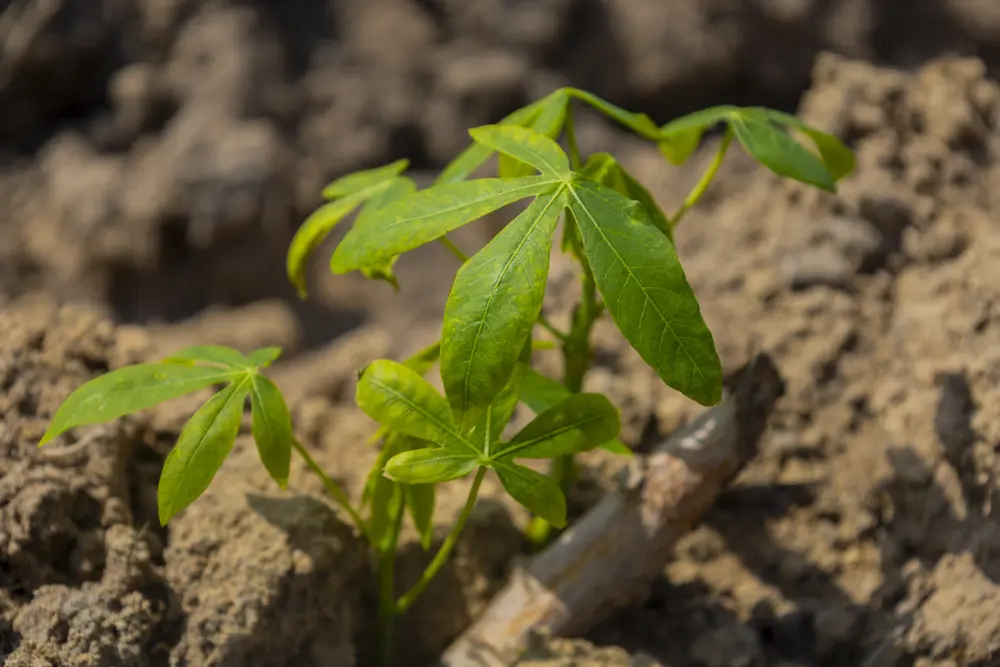
Ministem propagation involves cutting cassava stems into smaller sections with fewer nodes than conventional stem cuttings.
These small cuttings are usually raised in nurseries close to the farms before being transplanted into fields.
The technique allows many more plants to be produced from a single stem while reducing transportation and distribution costs. When properly managed, ministem propagation can achieve high survival rates.
Tissue Culture
Tissue culture is a laboratory-based propagation method used to produce large numbers of genetically identical cassava plants.
Tiny cuttings are sterilised, placed in special substrates inside test tubes, and grown in controlled, sterile environments. When they are large enough, they are transplanted into appropriate soil mixes and acclimatised until they can be taken out to the field for final transplanting or multiplied further, using techniques like Semi-Autotrophic Hydroponics (SAH).
This technique relies on strict protocols, special equipment and training and it is particularly useful for multiplying disease-free planting materials. It is also used to maintain the large cassava germplasms at research institutions because it produces small, manageable, disease-free plants that can be stored in special labs.
When cassava varieties need to be distributed across national borders, it is usually done with tissue cultures.
Semi-Autotrophic Hydroponics (SAH)
SAH is a relatively new development from the International Institute of Tropical Agriculture (IITA). It involves taking disease-free tissue-cultured varieties and rapidly multiplying them into new plantlets in trays.
Production costs are much lower, relative to Tissue Culture and the results are significantly faster. Where tissue culture can take up to 4 months to produce planting materials that may still have to be nursed and acclimatised to field conditions, SAH can produce field-ready materials within 6-8 weeks.
A small-sized facility can expect to produce up to 7 million plantlets annually.
In 2025, IITA scientist Dr Mercy Diebiru-Ojo was named a laureate of the Africa Food Prize for her contribution to cassava and yam seed systems. Her work helped move SAH from a scientific breakthrough to a scalable multiplication system, creating enterprise opportunities for seed producers.
The Importance of Cassava Breeding
Cassava breeding programmes play a critical role in improving food security, farmer incomes, and agricultural resilience. By developing improved cassava cultivars that can withstand pests, diseases, and environmental stress, researchers help farmers achieve higher and more stable yields while reducing dependence on costly agricultural inputs.
Although developing a new cassava variety requires years of careful research and testing, the benefits can extend to millions of farmers and consumers across Africa and other cassava-growing regions.
Frequently Asked Questions
Developing a new cassava variety typically takes six to seven years from the initial cross-pollination stage to public release.
Improved cassava cultivars can provide higher yields, better resistance to pests and diseases, and improved tolerance to drought and other environmental stresses.
Farmers generally propagate cassava using stem cuttings rather than seeds. Breeders, however, use seeds during the development of new cultivars.
Elite clones are the highest-performing plants selected from thousands of breeding candidates after several years of testing and evaluation.
Tissue culture is a laboratory propagation technique used to rapidly multiply disease-free cassava plants for research, distribution, and commercial production.
Related Articles
- A Brief History of Cassava Breeding in Africa
- Understanding Cassava Varieties: Landraces and Improved Varieties Explained
Further Reading and Resources
Publications
- International Institute of Tropical Agriculture (IITA). (1990). Cassava in Tropical Africa: A Reference Manual.
- Felix I. Nweke, Dunstan S . C. Spencer, John K. Lynam. (2002). The Cassava Transformation: Africa’s Best Kept Secret.
- Alfred G.O. Dixon et al. (2007). Fast Track Participatory Approach to Release Elite Cassava Genotypes for Various Uses in Nigeria’s Cassava Economy.
- John A. Otoo. (1994). Rapid Multiplication of Cassava
- International Institute of Tropical Agriculture (IITA). Cassava In Vitro Processing and Gene Banking
- International Institute of Tropical Agriculture (IITA). Semi Autotrophic Hydroponics for Cassava Multiplication
Key Organisations