

Nigeria is the world’s largest cassava producer. Yet this scale has not translated into a meaningful export position.
According to UN Comtrade, Nigeria exported roughly 5,000 metric tonnes of cassava products in 2023, less than one percent of its production volume. Most of these exports were derivatives such as starch and flour, alongside food products like garri and fufu.
Meanwhile, Thailand offers a useful contrast. In the same year, it exported about seven million metric tonnes of cassava-based derivatives, roughly 21 percent of its production, despite producing only about half as much cassava as Nigeria.
This gap highlights a clear opportunity for Nigeria, but also a harder truth. High production alone does not create export competitiveness.
For Nigerian processors wishing to export, the key question is which cassava derivatives can be exported competitively, into which markets, and under what conditions.
Industry engagement across China, Europe, and Africa indicates that the opportunity is concentrated in a few options. Commercial viability depends on meeting product specifications, as well as achieving scale, competitive landed cost, and commercial credibility.
Four pathways stand out, though they vary significantly in accessibility. We begin with the most immediate entry point.
1. Native starch into China: the clearest near-term pathway
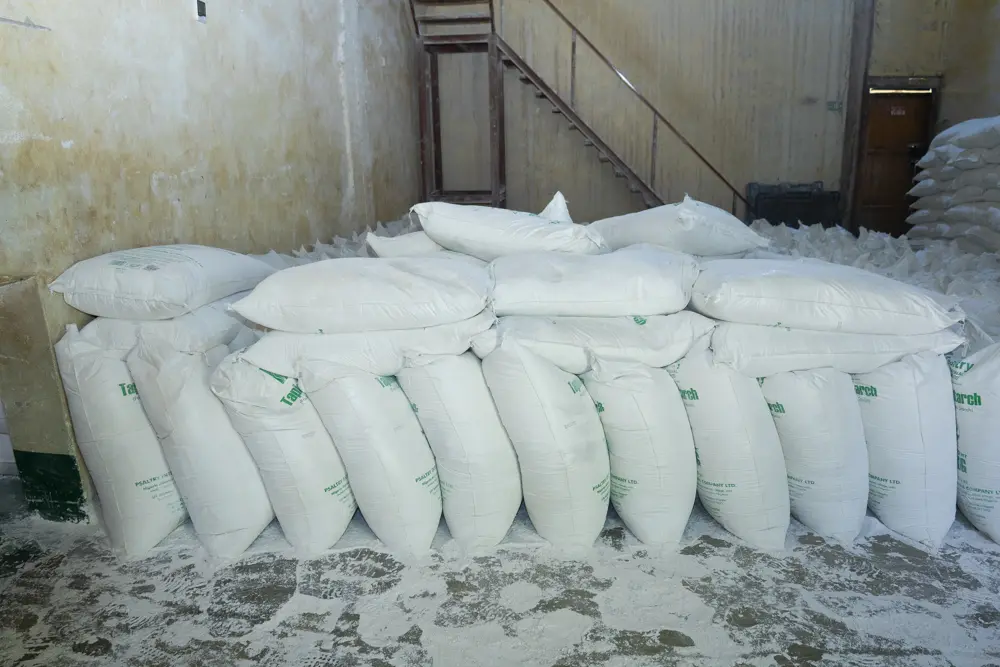
Trade data from the International Trade Center (ITC) shows that China is the world’s largest cassava starch import market, with annual imports exceeding 3.8 million metric tonnes.
Industry engagement suggests that some buyers are actively looking to diversify away from Thai and Vietnamese supply. This creates a potential opening for new entrants that can offer reliable output at competitive prices.
The relevance of this pathway is straightforward. The market is large, established, and already aligned with a product that some Nigerian processors produce today.
However, entry requires more than supply. Processors would need to deliver consistent product quality, support export cycles with adequate working capital, fulfil repeat orders with reliable shipment performance, and land starch competitively against prevailing import prices of $518–$594 per tonne.
For processors that can meet these conditions, this remains the most credible near-term export route.
A second pathway sits in regional markets.
2. Sweeteners into African markets: a strategic medium-term play

Regional demand for cassava-based sweeteners such as glucose and sorbitol is already significant. Trade data for 2024 suggests demand across African markets, excluding Nigeria, stands at roughly 300,000 to 400,000 metric tonnes.
A small number of countries, including Kenya, South Africa, and Egypt, account for about 20-25% of this demand.
This pathway offers Nigerian processors an opportunity to move into higher-value derivatives, but entry requirements are more stringent.
Processors would need to meet food-grade specifications consistently, including the purity and performance required for manufacturers to use these inputs reliably in finished products
This pathway is not limited to existing sweetener producers. It may also be viable for starch processors that are sufficiently capitalised to invest in downstream conversion capacity and capability.
In target markets, prices for glucose and sorbitol are already competitive, so Nigerian processors would need to match these landed costs to gain market share. The African Continental Free Trade Agreement (AfCFTA) could strengthen the economics of regional supply in some corridors, but only where tariff concessions are operational and rules of origin are met.
3. Cassava chips into China: the largest but most difficult market
China represents the largest global market for cassava chips. Imports have averaged about 5 million metric tonnes annually over the past decade, with trade valued at over $1 billion, according to trade data.
These chips are used primarily as feedstock for ethanol production, and buyers assess them against clear technical thresholds. These include starch content of at least 67 percent, moisture below 14 percent, fibre below 5 percent, and sand and silica below 3 percent.
Meeting these specifications consistently is only the first hurdle. The second is scale.
Chinese buyers operate at volumes far beyond what most Nigerian processors currently supply. Daily requirements typically range from 700 to 1,400 metric tonnes, while even sales through intermediaries tend to require around 200 metric tonnes per day.
By contrast, many Nigerian processors operate at 15 to 30 metric tonnes per day. Participation would therefore require significantly higher utilisation of existing plant capacity, expanded capacity, or coordinated aggregation across multiple suppliers.
Cost competitiveness presents a further constraint. Industry estimates suggest FOB chip prices of about $222 per tonne from Southeast Asia, compared with around $250 from Nigeria. Freight costs to China are also roughly $12 per tonne from Southeast Asia versus about $75 from Nigeria.
On a delivered basis, this creates a cost gap of approximately $91 per tonne that Nigerian exporters would need to close to compete effectively in this market. Until these structural constraints are addressed, this pathway remains difficult despite its scale.
4. Starch into Europe: demand exists, but product fit is limited

According to Trade data, the European Union imports between 150,000 and 200,000 metric tonnes of cassava starch annually.
However, 60 to 70 percent of this demand is for modified starch. Nigerian processors are currently concentrated in native starch production. The challenge, therefore, is not the size of the market, but the product fit.
There are two potential entry routes. Processors could invest directly in starch modification capability or supply native starch to intermediaries for further processing.
Even then, success for Nigerian processors would depend on continuity of supply, consistent quality, and commercial credibility to enter a relationship-driven market already served by established suppliers.
Nigeria’s cassava export opportunity is not broad-based. It is concentrated in a small number of derivative-market pathways, each with distinct requirements.
This makes selectivity essential. Nigerian processors will need to identify where they can compete and close gaps in scale, cost, product specification, and reliability to serve those markets consistently and at competitive terms.
As a result, this opportunity will be captured by processors who make deliberate choices and target the most viable markets. Success will depend on doing the commercial work early with buyers and export institutions, while using sector platforms such as NCIA to strengthen investment readiness, coordination, and market access.