


Nigeria is the world’s largest cassava producer, yet this scale has not translated into reliable industrial supply or widespread adoption of cassava derivatives.
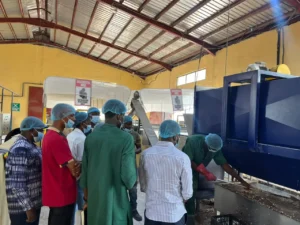
In August 2026, the Nigeria Cassava Investment Accelerator (NCIA) convened processors, industrial buyers, regulators, and other stakeholders to examine this gap. The discussion showed that no single constraint explains it. Industrial growth depends on productive farms, efficient harvesting and aggregation, competitive processing costs, consistent quality, and a focus on applications in which each derivative performs well and has proven buyer demand.
This article distils the key insights from the roundtable and considers what they mean for investment across the cassava value chain.
Reported cassava production does not equal reliable factory supply
Roundtable participants questioned whether Nigeria’s headline cassava production figures reflect the volume of roots actually harvested. They noted that production estimates may be based partly on the area cultivated and assumed yields.
Where mature roots are left unharvested due to high labour costs or other factors, estimated production may therefore exceed the actual harvest. One participant estimated that, in some production areas, up to 60 per cent of planted cassava may remain unharvested.
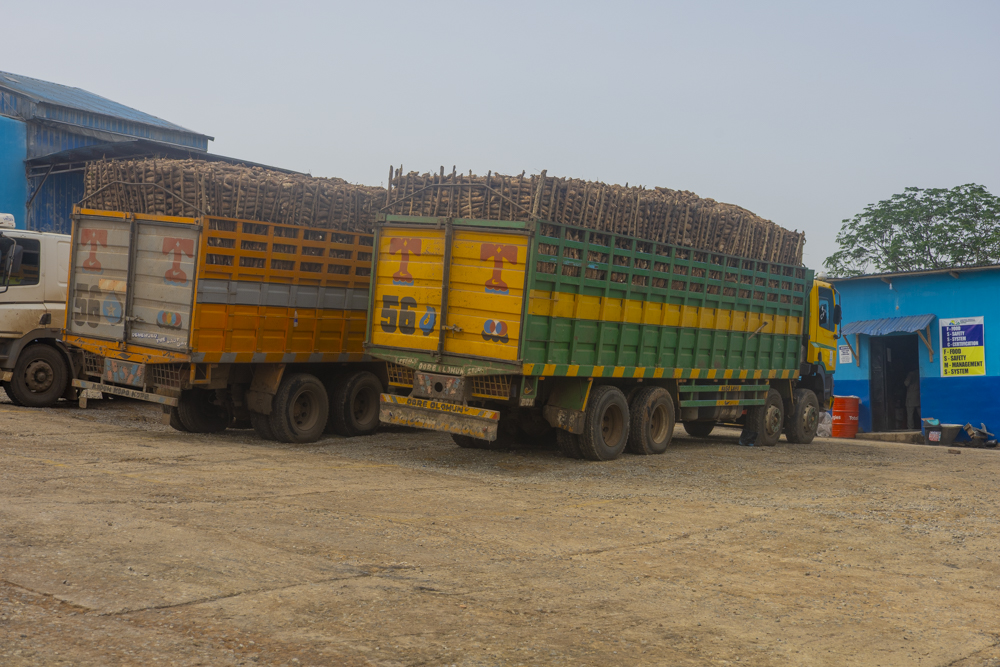
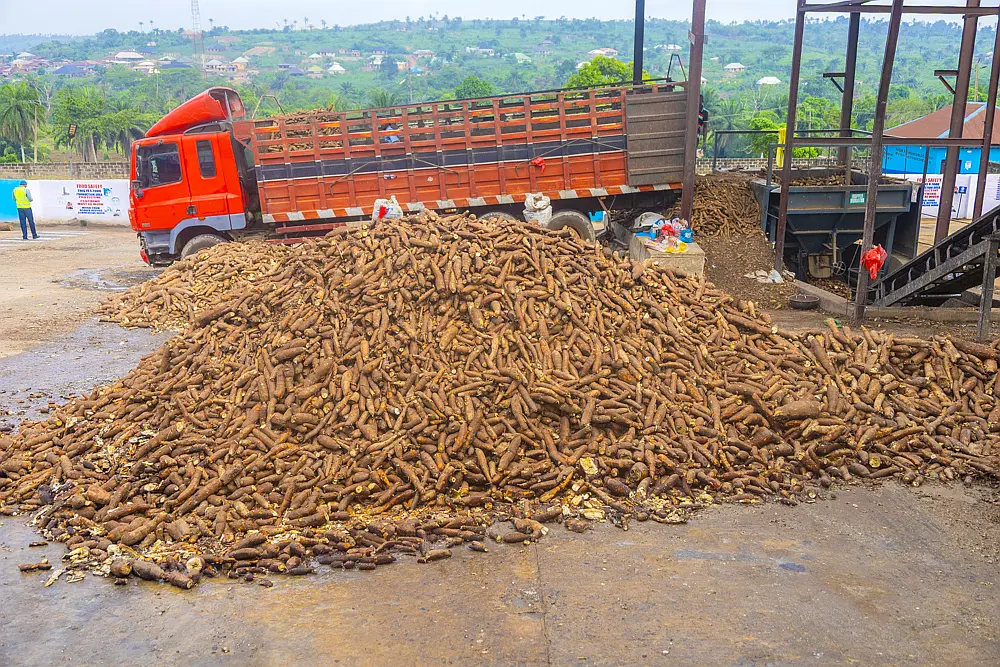
Even where roots are available, weak aggregation and transportation systems can prevent them from reaching factories reliably and in good condition. Cassava deteriorates quickly after harvesting, so improved aggregation, transportation, and coordination between farmers and processors are needed to move roots to factories within the required processing period.
Reported production is therefore not the same as reliable industrial supply. Factories need roots delivered at a commercially viable cost.
Higher farm productivity is needed to serve both food and industry
Cassava already serves important food markets, including garri and fufu, leaving industrial processors to compete for available roots. Rather than diverting cassava from established food uses, participants emphasised the need to expand total supply by increasing farm productivity.
The World Bank Group’s 2025 Nigeria Country Private Sector Diagnostic identifies low yields as a constraint to industrial cassava investment, citing average Nigerian yields of 8.2 tonnes per hectare in 2020, compared with 12.8 tonnes globally and 24 tonnes in Southeast Asia.
Participants linked the productivity gap to limited availability of improved high-yield cassava varieties, poor agronomic practices, and inadequate extension support. Although research institutes have developed improved varieties, there is insufficient capacity to multiply and distribute their planting stems to farmers at scale. Even where farmers obtain improved stems, achieving the yield potential consistently depends on applying recommended practices such as correct crop spacing.
Stronger extension support is therefore needed to help farmers use these varieties effectively. Higher yields would increase the volume of roots available for both food and industrial processing without requiring one market to displace the other.
High harvesting, logistics, and conversion costs constrain factory competitiveness
Participants identified harvesting, transportation, and conversion costs as important constraints on the competitiveness of cassava processing relative to grains.
Harvesting remains largely manual and labour-intensive. It becomes particularly difficult and expensive during the dry season, when hardened soil makes roots harder to uproot.
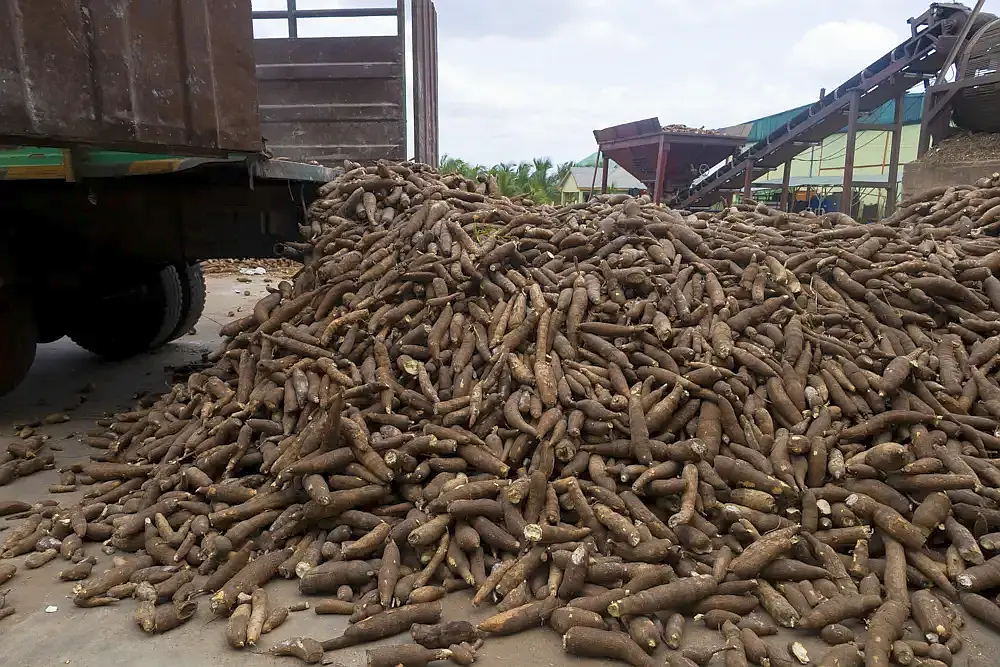
Then again, fresh cassava roots are approximately 70 per cent water. Processors therefore incur significant costs transporting bulky roots from farms over poor roads, even though much of their weight will not become finished product.
Cassava’s short post-harvest life also limits storage options, requiring frequent deliveries and close coordination between farmers and processors. This places cassava at a disadvantage to grains, which contain a higher proportion of usable dry matter and can be stored for longer periods.
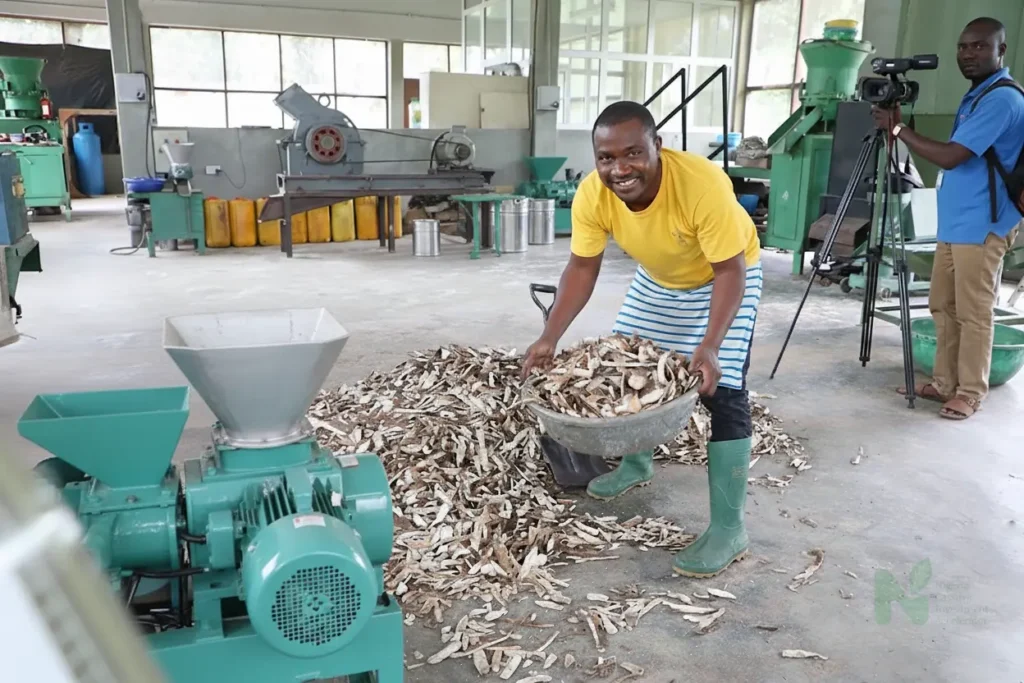
For starch production which is also the starting point for sweeteners and bioethanol, cassava requires several preparation stages at the factory. These include washing, peeling, grinding, starch extraction, and drying. These stages require equipment and energy making cassava starch more expensive to produce where logistics and power costs are high.
Improving harvesting efficiency, reducing transportation costs, and increasing conversion efficiency would strengthen the competitiveness of both existing and new processing facilities. These cost disadvantages also reinforce the need to focus on derivatives and applications where cassava can compete with alternative inputs.
Higher industrial adoption depends on targeting applications where cassava can compete
The roundtable discussion indicates that cassava derivatives should not be promoted as general substitutes for competing industrial inputs. Adoption is more likely when a specific derivative is matched to an application in which it meets the buyer’s technical, quality, and commercial requirements.
Participants identified industrial potential in cassava-derived bioethanol, cassava-derived sweeteners, and cassava-wheat composite flour. Biscuit production was highlighted as a potential application for composite flour, as biscuits depend less on gluten for structure than bread does
The discussion also highlighted cassava starch. A participant reported that locally produced cassava starch had become price-competitive with imported starch. However, it was noted that cassava starch may perform differently from corn starch in particular uses, even when both meet similar laboratory specifications.
Quality and functionality are therefore related but distinct. Regulatory representatives described existing standards, laboratory services, and certification arrangements, while industrial buyers raised concerns about inconsistent test results and possible contamination across processing and supply activities.
Neutral testing arrangements could help resolve differences between buyers’ and suppliers’ results and strengthen confidence in locally produced derivatives.
Supplier development is also important. Buyers can help processors understand their technical requirements, improve production practices, and maintain consistent quality. Working with offtakers to establish specifications and validate product performance would help processors focus on applications with demonstrated commercial potential.
Implications for investment and next steps
The roundtable highlights a central lesson for investors. Commercially viable cassava projects must align reliable feedstock supply, competitive processing costs, and demonstrated industrial demand. Higher farm output will have limited industrial impact if roots cannot be delivered and processed economically, while additional processing capacity will struggle if derivatives do not meet buyers’ requirements. These considerations apply to both improving the utilisation of existing facilities and developing new ones.
These insights are shaping NCIA’s work in four areas: improving farmer productivity and feedstock supply; strengthening market linkages among farmers, processors, and industrial buyers; supporting processor development and quality assurance; and advancing application-led product development in collaboration with buyers, regulators, and researchers. Together, these priorities will guide NCIA’s efforts to address the constraints limiting the industrial adoption of cassava derivatives, and, in turn, improve the viability of investments in cassava processing.