
The insights shared here also informed recent features in Vanguard Newspaper and Business Day.
Unleashing Nigeria’s Cassava Potential
Nigeria’s cassava industry is evolving from smallholder productions to an industrial ecosystem powered by private investment and innovation. A growing number of agro-industrial firms are proving that cassava can power inclusive growth, create jobs, and strengthen food and energy security when supported by the right skills, infrastructure, and financing.
These real-world success stories highlight a clear truth: cassava industrialisation in Nigeria is not aspirational, it is achievable.
Niji Farms: Building Capacity and Innovation for the Next Generation of Agripreneurs
For Niji Farms, part of the Niji Group, the future of cassava industrialisation depends on people as much as technology. CEO Kolawole Adeniji emphasises that Nigeria needs a new generation of agripreneurs who combine technical expertise with managerial and leadership competence.
He advocates for hands-on, practical training that integrates education, research, and agribusiness incubation. Educational institutions, he says, should move beyond teaching theories. They should develop programmes that prepare young agro-entrepreneurs to manage and scale integrated cassava enterprises.
“We must invest in the next generation of cassava pioneers through structured managerial training and real-life learning environments,” says Adeniji.
Underutilised portions of land in schools and government agencies, he adds, could be converted into training farms. These would serve as living laboratories for skill development and agribusiness incubation.
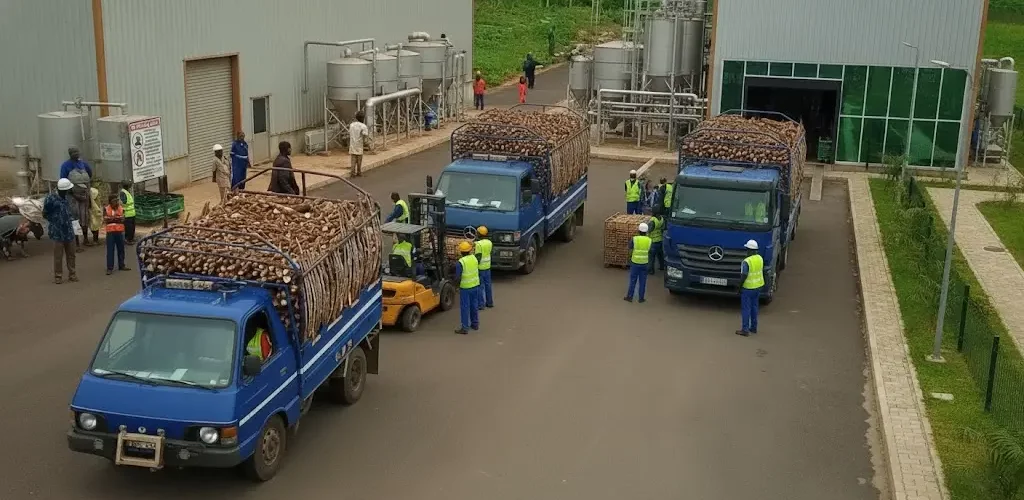
Niji Farms has developed one of Nigeria’s most integrated cassava processing ecosystems. It operates a modular starch facility with a 50-ton-per-day input capacity, backed by a 700-hectare block farm to secure cassava feedstock.
The company provides farmers with access to financing, machinery, farm inputs, and training. This support helps them grow better yields, supply cassava more consistently, and earn higher incomes throughout the year.
Adeniji also emphasises the importance of financing models that work for agribusinesses—funding structures that blend loans and grants to help enterprises scale sustainably. He advocates for low-interest, performance-linked financing and flexible instruments that adapt to seasonal realities, enabling agribusinesses to stay efficient and accountable.
“Financing should give agribusinesses the flexibility to grow and adapt, not lock them into rigid repayment cycles,” says Adeniji.
Psaltry International: From Local Sourcing to Industrial Scale
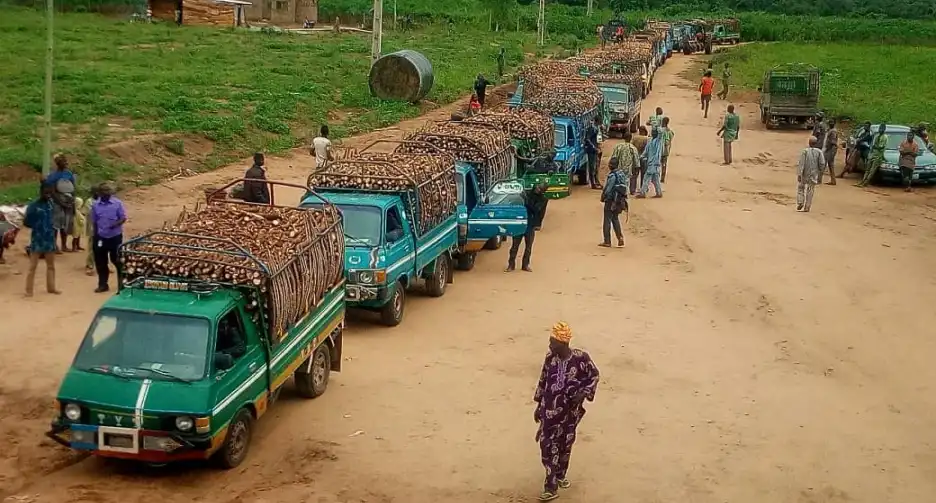
Psaltry International is one of Nigeria’s earliest integrated cassava processing enterprises and a clear example of how a strong sourcing network can drive industrial success. Starting as a small trading venture, the company has grown into a major producer of starch, sorbitol, and high-quality cassava flour—all processed from cassava.
At the heart of its model is a network of more than 3,500 in-grower and out-grower farmers who supply fresh roots to its processing facilities. This reliable raw material base enables steady production and supports the company’s expansion into new value-added products.
By producing cassava-based sorbitol locally, a first in Africa and second globally, Psaltry has helped reduce Nigeria’s dependence on imported sorbitol, which is widely used in food, pharmaceuticals, and personal care products.
The company’s integrated approach has also created jobs and improved rural infrastructure, showing how local sourcing can sustain industrial-scale operations and community development at the same time.
Harvest Feed: Tackling Infrastructure and Supply Chain Gaps
Harvest Feed and Agro Processing Limited (HFAP) is an emerging force in Nigeria’s cassava industrialisation space. What began in 2001 as a poultry feed enterprise has since expanded into an agro-processing company. HFAP now produces food- and industrial-grade starch for clients across the food, chemical, and manufacturing industries.
Director Adedamola Adeyemi outlines some of the constraints facing cassava processors in Nigeria and the investments needed to overcome them. Drawing from the company’s experience, he highlights how infrastructural and logistical bottlenecks—such as unreliable power supply, poor rural roads, and limited water systems—continue to constrain large-scale cassava processing.
Adeyemi notes that overcoming these challenges will require targeted investment in processing hubs located near production zones, with shared utilities like power, water, and waste treatment to reduce operating costs and improve efficiency.
He highlights the need for harvesting machinery, improved storage, and better coordination between farmers and processors to ensure consistent, high-quality raw material supply.
According to him, “Investments in modern harvesting, storage, and drying technologies can extend cassava shelf life and reduce post-harvest losses.”
Also in his view, affordable, long-term financing for both farmers and processors will be critical to scaling operations and enabling wider adoption of modern technologies.
These insights underscore the broader conditions needed for Nigeria’s cassava sector to grow competitively and sustainably at industrial scale.
Catalysing Inclusive Industrial Growth
The experiences of Niji Farms, Psaltry International, and Harvest Feed reflect both the progress and the potential of Nigeria’s cassava transformation. Together, they highlight how local innovation, capacity building, and private investment can turn cassava into a true engine of industrial growth.
What is needed is greater scale and coordination—among financiers, policymakers, and agripreneurs—to sustain momentum and unlock billion-dollar opportunities across the value chain.
By combining skills development, infrastructure investment, and financing structures that reflect agricultural realities, cassava can move from being a subsistence crop to a national industrial asset, creating jobs, driving inclusive growth, and strengthening resilience in rural economies.