
Cassava has long been viewed in Nigeria as a subsistence crop, a reliable staple that helps households navigate rising food prices and economic uncertainty. It is grown for resilience and consumed for survival, forming the backbone of food security for millions.
Yet outside Nigeria, cassava is taking on very different forms. In several other regions, cassava is being transformed into biodegradable materials, renewable energy, and industrial inputs that serve markets far beyond the plate.
This global evolution reveals a broader truth: cassava is no longer just a food crop; it is becoming an innovation crop.
These developments are relevant for Nigeria because they show what cassava can become in a more advanced industrial ecosystem.
Cassava in Bioplastics
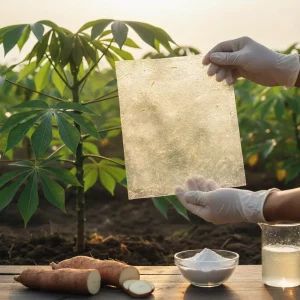
One of the most striking pathways is the emergence of cassava-based bioplastics and biodegradable packaging.
In Southeast Asia, starch extracted from cassava waste has been used to produce biodegradable films and packaging materials with tensile strength and flexibility comparable to conventional plastics.
By redirecting peel and pulp into packaging, processors reduce waste while creating materials that decompose under natural conditions, offering a low-carbon alternative to petroleum-based plastics.
A 2023 study on cassava bioplastics in Thailand, found that cassava-based bioplastics can generate about 14 to 22 times the economic value of raw cassava roots, highlighting the significantly higher value capture possible with industrial derivatives.
Together, these examples show how cassava can feed into a circular materials economy that supports both environmental and industrial goals.

Cassava and Biofuels
Cassava byproducts are also emerging as valuable inputs for renewable energy. Across research sites in Asia and Latin America, cassava peels, pulp and liquid effluent have been converted into bioethanol, biogas and other biofuels through fermentation or anaerobic digestion.
These systems help address two problems at once:
- Managing agricultural and processing waste
- Supplying energy to rural areas with limited or unstable electricity.
Although many projects remain at pilot scale, they show how cassava waste can become a productive asset within a broader bioenergy system.
Cassava in Construction Materials
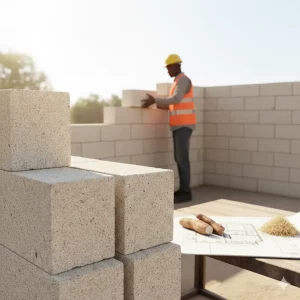
For decades, cassava starch has served as a key input in paper, textiles, adhesives and pharmaceuticals. More recently, in Brazil, modified cassava starch is being explored as a binder in concrete and other construction materials.
This type of industrial starch can improve the performance of concrete mixtures while reducing the reliance on synthetic binders.
Like other advanced cassava applications, research suggests that industrial and modified cassava starch can deliver significantly higher value than raw roots, particularly when integrated into chemical and manufacturing supply chains.
Where Nigeria’s Cassava Sector Stands Today
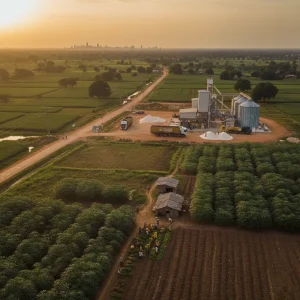
Nigeria produces more cassava than any other nation, with output estimated at over sixty million metric tonnes in 2023. Yet most of that production flows into low-margin markets such as garri, fufu and basic flour. These products are essential for food security, but they do not capture the value seen in more advanced cassava-derived goods.
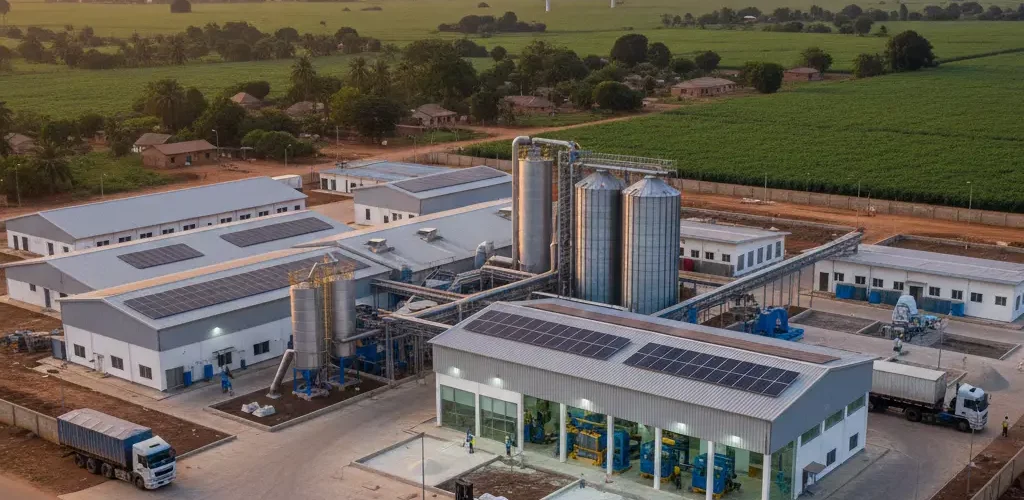
While cassava processing facilities exist in the country, most are not equipped for bioplastic production, waste valorization or industrial-grade starch production. Many operate without the laboratories, standards or quality systems required for higher-value markets.

Building the Ecosystem for Cassava Innovation
Participating in the next wave of cassava-driven innovation, will require coordinated progress across several parts of the ecosystem.
- Upgraded Processing Infrastructure: Factories will need investment to handle both high-quality starch extraction and the conversion of waste streams into industrial inputs such as bioplastics or bioenergy.
- Supportive Policies and Standards: Clear policies, regulatory frameworks, and incentives around biodegradable materials, biofuels and industrial starch can help reduce uncertainty and attract private investment.
- Innovation Finance: Many of these applications require capital for research, testing and certification. Targeted industrial financing can help bridge this gap.
- Market Development and Offtake: Domestic and export demand for cassava-based materials must be cultivated through partnerships among manufacturers, retailers and global buyers.
The Opportunity Ahead for Nigeria
As other regions move forward with innovative cassava derivatives, Nigeria has an opportunity to learn, adapt and chart its own path. The raw material is abundant. Global demand signals are growing stronger. The question now is whether the supporting ecosystem will evolve quickly enough to unlock cassava’s next frontier.