

In October 2025, the Cassava Flour (Mandatory Inclusion in Flour Production) Bill, 2022 reached the public hearing stage in the Nigerian Senate, renewing national focus on cassava and signalling political will to drive local agricultural value addition. In parallel, the Federal Ministry of Agriculture and Food Security (FMAFS) revived its push for a 20 percent high-quality cassava flour (HQCF) inclusion target, supported by master baker training and updated policy guidance.
A Market Poised for Growth
Current industry estimates suggest that actual HQCF inclusion in composite flour today is around 1 percent, equivalent to a market value of up to US $35 million. If Nigeria achieves the 20 percent substitution target proposed in the bill, market potential could scale up to US $1.18 billion by 2030, unlocking value across the cassava supply chain and positioning HQCF as a major driver of industrial growth.
Bread and Baked Goods Lead the Way
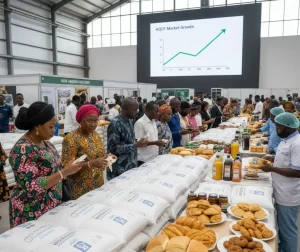
HQCF is primarily consumed by small- and medium-scale producers, especially in the bread and baked-goods segment, which accounts for over 50 percent of current usage.
Artisanal bakers remain the dominant consumer group, purchasing HQCF directly through open-market channels and typically using 5–30 percent substitution blends to cut costs and align with policy incentives.
Despite the fragmented nature of this market, the bread segment presents the largest immediate opportunity — with a potential market of about 351,000 tons and US $236 million in revenue.
Persistent Supply and Quality Challenges
Despite strong policy signals and growing interest, HQCF remains a largely nascent market due to persistent challenges around cost, quality, and supply reliability. Industrial uptake has been limited not for lack of demand, but due to inconsistent and uncompetitive supply.
Buyers frequently cite three critical deterrents:
- inconsistent product quality,
- price volatility, and
- fragmented supply chains.
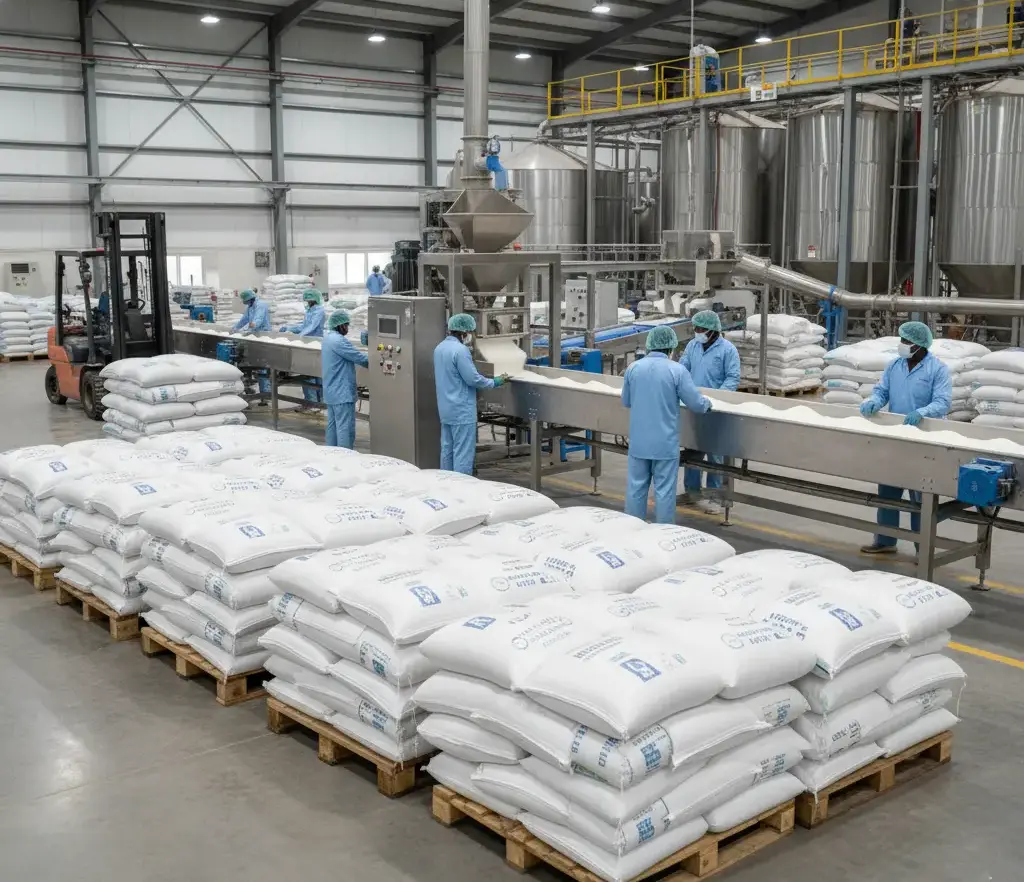
Many local processors struggle to meet industrial standards for granulation, moisture content, and shelf life — factors essential for large-scale baking or blending. These issues stem from limited investment in quality control, fragmented production systems, and a lack of standardised processing infrastructure.
The Price Barrier
Pricing is another structural constraint. HQCF has recently been around 9 percent more expensive than wheat flour, largely due to inefficient feedstock sourcing, underdeveloped logistics, and weak coordination across actors.
Without scale or cost efficiency, processors face difficulties offering a competitive product — undermining both buyer confidence and policy ambitions.
Innovation and Investment: The Missing Links
Unlocking this market will require more than regulation. It will demand targeted innovation across the value chain, from processing technologies to input-supply models.
Investments in research and development (R&D) are essential to localise recipes and adapt HQCF to Nigeria’s consumer and industrial taste profiles.
The cassava chips market presents a scalable entry point: it offers improved shelf life, enables pre-processing close to farms, and simplifies logistics — reducing some of the biggest friction points in the current system.

Encouraging Signs
Encouraging signs are emerging. Processors like Sofari Foods are investing in scalable chip-based approaches to improve handling, drying, and product consistency. Research institutions such as the International Institute for Tropical Agriculture (IITA) are advancing cassava varieties better suited for flour production.
But realising full market potential will require more coordination, greater scale, and sustained investment to translate innovation into impact.
Conclusion: Turning Policy into Progress
The opportunity is clear. But without structural shifts on the supply side, even the strongest policy push won’t be enough to turn HQCF into Nigeria’s next industrial success story.